Recycling equipment manufacturerFor a green future
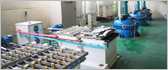
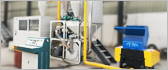
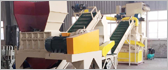
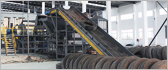


Used car tire recycling equipment is a specialized system designed to process scrap tires into renewable resources such as rubber granules, rubber powder, and steel wire. It alleviates the burden on landfills and incineration facilities while maximizing resource recovery, supplying reusable raw materials to industries producing rubber goods, track surfacing materials, and modified asphalt.
Automotive tires have a complex structure, consisting primarily of rubber, steel wire, and fiber. Before entering the recycling line, tires typically undergo processing by a bead wire remover and a tire cutter. The bead wire remover extracts the steel wire from the tire bead, thereby reducing wear on downstream equipment, while the cutter slices whole tires into blocks of approximately 50–100 mm to facilitate entry into the shredding system.
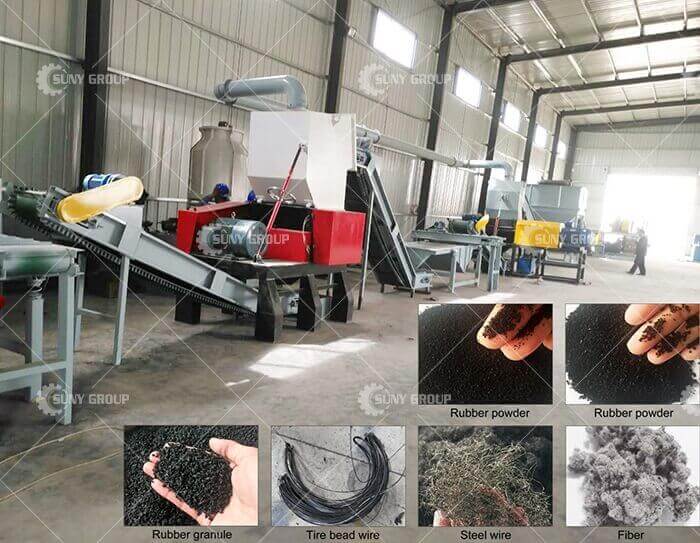
For recycling projects involving passenger car and light truck tires, the pre-treatment stage directly impacts the production line's capacity and energy consumption. An optimized front-end configuration can reduce the shredding load by over 20% and enhance operational stability.
The core components of a tire recycling line typically include a dual-shaft shredder, a rubber granulator/pulverizer, a magnetic separator, and a fiber separation system. The dual-shaft shredder further reduces tire blocks to 20–50 mm; subsequent fine-processing equipment then converts the material into 1–5 mm rubber granules or 10–40 mesh rubber powder.
During the separation stage, high-intensity magnetic drums effectively recover steel wire, often achieving a purity level exceeding 95%. The fiber separation system employs air classification technology to remove nylon fibers, thereby increasing the purity of the rubber powder. High-quality rubber powder is suitable for applications such as sports surface installation, rubber flooring tiles, and the manufacture of reclaimed rubber products.
As the tire recycling industry scales up, technologies such as automated conveying systems, PLC controls, and intelligent monitoring are increasingly being integrated into production lines. Modern equipment enables continuous feeding, automated separation, and centralized dust collection, minimizing the need for manual intervention and enhancing operational safety.
Taking a tire recycling line with a capacity of 1–3 tons per hour as an example, the system supports continuous operation from initial tire feeding to the output of rubber powder, making it ideal for small-to-medium-sized recycling enterprises and resource recovery projects. Compared to traditional manual processing methods, automated equipment offers significant advantages in terms of production capacity, recovery rates, and operational cost control.
Thank you for your interest in suny group. If you want to learn more about our E-waste recycling plant, copper wire recycling machine and other machines, Contact us now to find out what we can do for you next project!E-mail:[email protected] | Whatsapp:+8613674945231