Recycling equipment manufacturerFor a green future
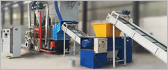
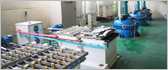
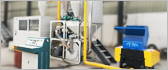
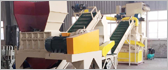


Precious metals such as gold, silver, and palladium in electronic waste are often mixed with copper, tin, resin, and glass fiber. Precious metal extraction equipment is not a single machine; it utilizes crushing, screening, magnetic separation, and electrostatic separation to first enrich the metal-containing materials before proceeding to subsequent refining stages, thereby improving recycling efficiency.
After waste PCBs, circuit boards, connectors, and electronic components enter the production line, they typically undergo size reduction first through a twin-shaft shredder, hammer mill, or blade mill. For PCB materials, the commonly used mechanical pretreatment particle size in studies is approximately 3–5 mm; further refinement helps to gradually separate the metal from the resin and glass fiber.
Here is an easily overlooked issue: finer crushing is not always better. Over-crushing increases dust and equipment energy consumption, and may also result in the loss of fine powder. Therefore, precious metal recycling equipment needs to determine the appropriate output particle size based on the PCB thickness, metal content, and subsequent sorting methods, rather than simply pursuing smaller particles.
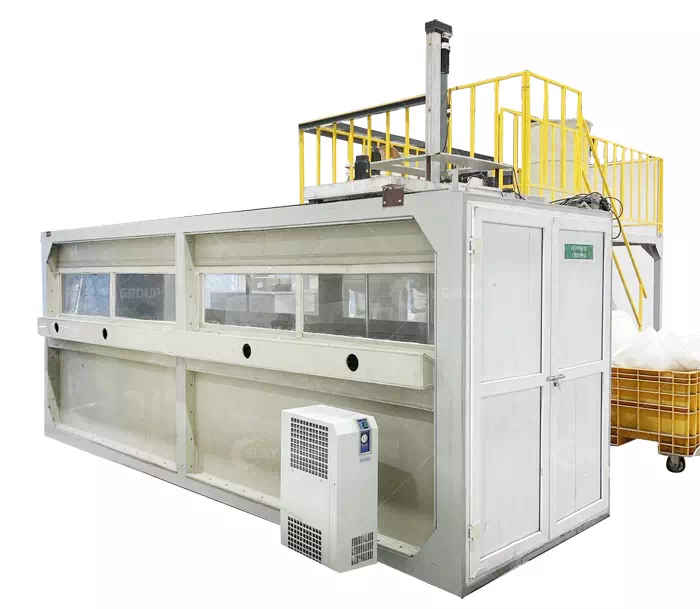
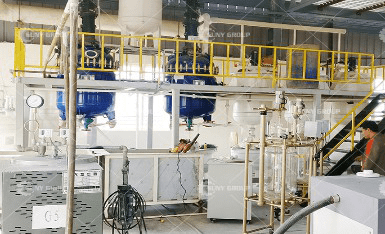
Precious Metal Extraction Equipment for E-Waste
The crushed mixture can first use a magnetic separator to remove ferromagnetic impurities, reducing the load on subsequent equipment; for coarser non-ferrous metal particles, an eddy current separator can be configured. Related research shows that eddy current separation is more suitable for non-ferrous metal particles in the range of approximately 2–50 mm, while electrostatic separation is more suitable for finer particles.
Electrostatic separators utilize the difference in conductivity between metals and resins/glass fibers, causing metal and non-metal particles to exhibit different trajectories. A 2025 study used a combination of crushing, magnetic separation, and electrostatic separation to process PCBs, controlling the pre-treatment particle size to below 3 mm to improve subsequent metal separation.
Therefore, a more efficient e-waste precious metal extraction system typically does not directly extract gold, but rather first obtains a high-metal-content concentrate through crushing → screening → magnetic separation → eddy current/electrostatic separation. The physically separated metal concentrate then enters hydrometallurgical leaching, pyrometallurgical smelting, or other refining processes based on its composition. Research indicates that although waste PCBs only account for a portion of electronic waste by weight, they can contribute significant resource recycling value; therefore, the quality of the initial sorting directly affects subsequent refining costs.
For electronic waste treatment plants, the focus of equipment selection is not simply adding more sorting equipment, but rather maximizing the feed stability of each subsequent process. For example, large PCBs are first disassembled and coarsely crushed, then screened to control particle size; ferromagnetic materials are preferentially removed; medium-sized particles enter eddy current separation, while fine particles enter high-voltage electrostatic separation.
This configuration reduces the amount of resin and fiber entering the metal concentrate, while increasing the enrichment of valuable metals such as copper, gold, and silver. It is important to note that magnetic separators or eddy current separators cannot independently achieve precise extraction of gold, silver, and palladium; they primarily serve as pretreatment and enrichment agents. True precious metal separation usually requires subsequent metallurgical equipment.
Thank you for your interest in suny group. If you want to learn more about our E-waste recycling plant, copper wire recycling machine and other machines, Contact us now to find out what we can do for you next project!E-mail:[email protected] | Whatsapp:+8613674945231