Recycling equipment manufacturerFor a green future
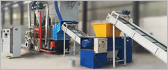
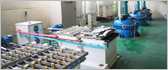
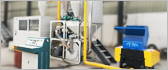
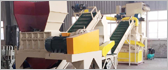


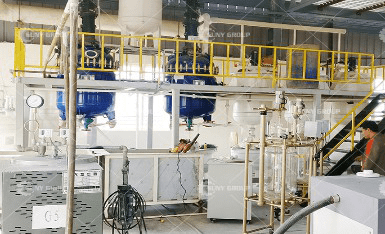
Against the backdrop of the automotive industry’s continued development, the processing of end-of-life lead-acid batteries is shifting from traditional, unsystematic recycling towards standardised, mechanised, and sophisticated processing. Truly valuable recycling involves not merely dismantling batteries, but utilising systematic equipment to achieve the efficient separation and reuse of lead, plastic and electrolyte.
Pre-treatment and Crushing System
The entire lead-acid battery processing production line begins with pre-treatment. Once waste batteries enter the conveyor system, they are fed into a crusher via an automatic feeding device for preliminary processing. The crushing equipment is typically designed with a heavy-duty structure, capable of crushing batteries as a whole within a sealed environment whilst effectively controlling acid leakage.
During the crushing process, the battery casing, plates and internal structures are rapidly broken down, preparing the material for subsequent sorting. The equipment is usually fitted with an acid collection system to centralise the treatment of released electrolyte, thereby ensuring production safety and meeting environmental protection requirements.
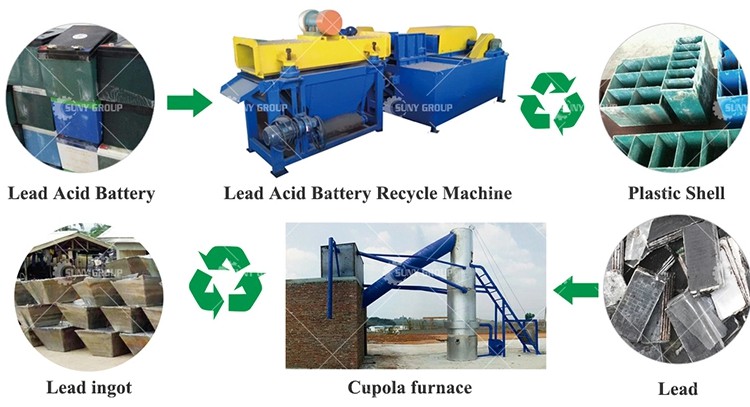
Sorting and Separation System
Once crushing is complete, the material enters a multi-stage sorting system. Through hydrostatic separation or density separation processes, materials of different densities are distinguished. Plastic casings, being of lower density, float on the water surface, whilst lead-containing materials sink, thereby achieving preliminary separation.
Subsequently, the heavy materials proceed to further processing, where screening and conveying systems are used to carry out a precise separation of lead paste and lead grating. The entire sorting system emphasises continuity and stability, ensuring that all types of materials are efficiently diverted, minimising cross-contamination and enhancing the purity of the recovered materials.
Final Product Output and System Advantages
Following multi-stage processing, the production line can output a variety of recovered products, including lead paste, lead metal and plastic pellets. The lead paste can be used for subsequent smelting and purification, whilst the plastic, after washing, can be reprocessed and reused, thereby achieving resource recycling.
The design of the entire system prioritises enclosed operation and environmental control, and is equipped with dust extraction and wastewater treatment systems to ensure the production process complies with environmental standards. Furthermore, the high level of automation effectively reduces labour costs and improves overall operational efficiency.
Thank you for your interest in suny group. If you want to learn more about our E-waste recycling plant, copper wire recycling machine and other machines, Contact us now to find out what we can do for you next project!E-mail:[email protected] | Whatsapp:+8613674945231