Recycling equipment manufacturerFor a green future
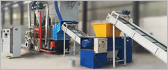
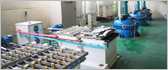
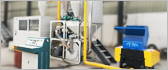
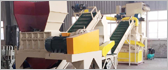
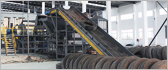


A waste tire recycling and processing line is an industrial system that transforms used tires into rubber granules, steel wire, and fiber resources through processes such as shredding, separation, and sorting. Its primary function is to efficiently dismantle tire materials and facilitate resource recovery, thereby increasing recycling rates and reducing environmental impact; it is suitable for applications in rubber regeneration and solid waste treatment.
A typical waste tire recycling line consists of a tire sidewall cutter, a bead wire separator, a dual-shaft shredder, a coarse rubber granulator, a fine granulator, a magnetic separation system, a fiber separation system, and conveying equipment. The entire system operates according to a workflow of "pretreatment—coarse shredding—fine shredding—separation and recovery."
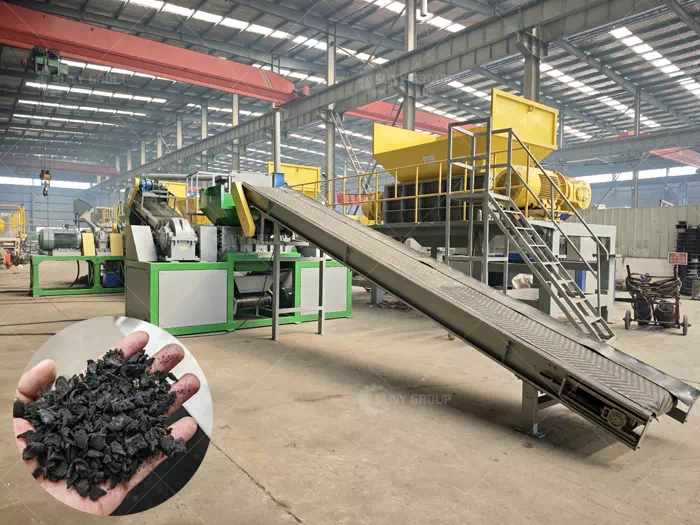
Waste Tire Recycling and Processing Production Line
At the initial stage, tire sidewall cutting and strip-cutting equipment remove the bead wire structure to reduce the load on downstream machinery. The material then enters a dual-shaft shredder for primary shearing, with a processing capacity typically ranging from 0.5 to 5 tons per hour (depending on the configuration). The shredded material proceeds to a secondary grinding system, where it is further processed into 10–30 mm rubber chunks, providing a uniform particle size for subsequent sorting.
The core of the line lies in the synergistic operation of the shredding and sorting systems. The shredding stage employs a low-speed, high-torque shearing mechanism, which effectively minimizes the risk of steel wire entanglement while enhancing blade durability. A magnetic separation system is used to extract steel wire components from the tires, achieving a separation efficiency of over 95%.
Fiber separation is achieved through airflow-based separation, utilizing differences in material density and specific gravity to segregate rubber granules from nylon fibers. Some high-end systems incorporate a combined vibrating screen and air separation setup, further boosting rubber purity to over 99%.
In terms of operation, the system emphasizes continuous stability and energy-efficient design; compared to traditional standalone processing methods, it reduces energy consumption by approximately 20%–35% while improving overall processing efficiency.
The processed rubber granules can be widely used in applications such as reclaimed rubber products, running track surfacing, rubber floor tiles, and industrial fillers. Meanwhile, the recovered steel wire can be remelted, and the fibers can serve as low-grade filler materials, enabling multi-level resource recovery.
This production line is suitable for tire recycling plants, environmental recycling enterprises, and centralized solid waste treatment centers. Based on industry data, a medium-sized production line can process between 3,000 and 10,000 tons of waste tires annually, effectively alleviating the environmental burden associated with landfilling and incineration.
In practical applications, equipment stability and sorting precision directly determine overall profitability; consequently, an increasing number of projects are adopting modular designs to facilitate future expansion and maintenance.
Thank you for your interest in suny group. If you want to learn more about our E-waste recycling plant, copper wire recycling machine and other machines, Contact us now to find out what we can do for you next project!E-mail:[email protected] | Whatsapp:+8613674945231