Recycling equipment manufacturerFor a green future
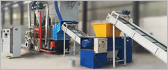
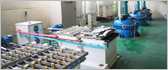
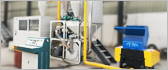


Lithium battery recycling lines typically first produce "black mass" using equipment for discharging, crushing, screening, magnetic separation, and air classification. Subsequently, equipment for leaching, filtration, impurity removal, solvent extraction, and precipitation is used to recover valuable metals—such as lithium, nickel, cobalt, and manganese—from the black mass solution. Mechanical pretreatment determines the purity of the black mass, while hydrometallurgy dictates the efficiency of subsequent metal separation.
The front-end of the production line focuses on safe pretreatment and material liberation. Depending on the battery type and feedstock condition, the line may be configured with discharging units, dismantling equipment, dual-shaft shredders, hammer crushers, fine crushers, vibrating screens, magnetic separators, air classifiers, and conveying systems.
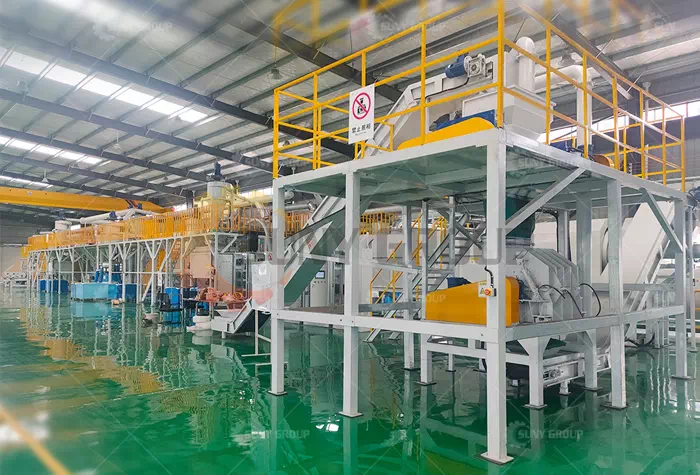
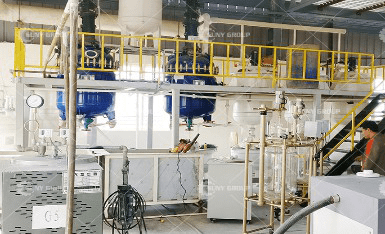
Lithium Battery Recycling Line & Black Mass Hydrometallurgy Process Line
Following staged crushing, the active materials from the cathodes and anodes are progressively liberated from the copper foil, aluminum foil, steel casings, and separators. Screening equipment controls particle size distribution, magnetic separators remove ferromagnetic impurities, and air classification utilizes differences in density and aerodynamics to further separate lightweight separator materials from heavier metal components. In industrial practice, the mechanical recovery rate of black mass is influenced by factors such as residual binder, crushing particle size, and screening efficiency; literature indicates that the mechanical recovery rate for black mass in some processes ranges from approximately 75% to 90%.
Upon entering the hydrometallurgy stage, the focus of the equipment shifts from "physical separation" to "metal separation within a solution." Typical equipment includes leaching reactors, heating and agitation systems, filter presses (or other filtration units), pH adjustment devices, solvent extraction units, concentration equipment, and crystallization/precipitation systems.
The process begins by leaching target metals from the black mass into a solution, followed by filtration to remove insoluble substances like graphite. Subsequently, impurity removal, solvent extraction, or chemical precipitation is performed based on the feedstock's chemical composition to progressively separate impurities (such as Fe, Al, and Cu) from the target metals (Li, Ni, Co, and Mn). For ternary material systems, Ni, Co, and Mn typically undergo multi-stage purification and ratio adjustment before proceeding to the precipitation or precursor preparation stages.
It is important to note that black mass is not a feedstock with a fixed composition. Battery chemistries such as NMC, LCO, and LFP differ significantly; therefore, a single wet-processing workflow cannot simply be applied across them. In particular, since LFP black mass contains no Ni, Co, or Mn, equipment configuration and target products must be redesigned around the Li-Fe-P system.
Thank you for your interest in suny group. If you want to learn more about our E-waste recycling plant, copper wire recycling machine and other machines, Contact us now to find out what we can do for you next project!E-mail:[email protected] | Whatsapp:+8613674945231