Recycling equipment manufacturerFor a green future
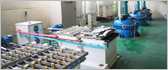
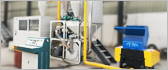
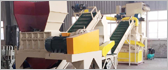
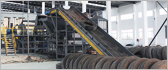


A lithium-ion battery recycling machine is a comprehensive equipment system integrating crushing, heat treatment, pulverization, sorting, dust removal, and waste gas treatment. It is mainly used to separate and recycle materials such as black mass, aluminum, copper, steel, plastics, and battery casings from waste Li-ion batteries, improving resource utilization and reducing the difficulty of subsequent processing.
A complete Lithium-ion Battery Recycling Line typically consists of multiple functional modules, with different equipment responsible for different material handling tasks. The front end is equipped with a feeding conveyor and a single-shaft shredder. Waste batteries first enter the system via the conveyor, then undergo preliminary crushing to reduce battery size and release internal materials.
Subsequently, the material can enter an externally heated carbonization furnace for heat treatment. Under oxygen-deficient or low-oxygen conditions, some organic matter and volatile components in the battery are processed, facilitating subsequent mechanical sorting. After being conveyed by a bucket elevator, the material enters a baffle-type separator and a drum magnetic separator to separate materials of different particle sizes and magnetic characteristics.
The middle and later stages mainly consist of a drum de-dustrer, a hammer crusher, and a turbine mill. The de-dustrer further removes powder adhering to the surface of the battery casing or other materials, while the crushing and grinding equipment processes the material to a particle size suitable for fine sorting. Then, further screening and separation are performed by a circular vibrating screen, an air classifier, and a cyclone collector, with different components collected separately by quantitative collection boxes.
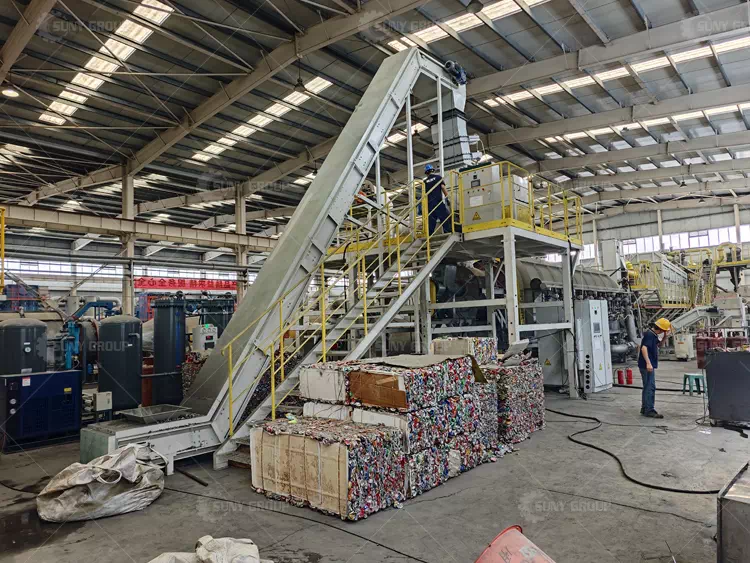
Li-ion Battery Recycling Machine Working Operation Guide
The core of this equipment is not simply "crushing," but rather a multi-stage process of crushing, dissociation, screening, sorting, and collection to progressively improve material separation efficiency.
In the initial crushing stage, the batteries are processed into smaller particles, making it easier for Black Mass to dissociate from materials such as copper, aluminum, plastic, and the casing. Subsequent de-dustrening, hammer crushing, and turbine milling further reduce the particle size, and then a vibrating screen and air classifier are used for fine separation based on particle size, density, and airflow characteristics.
According to the provided technical data, the system employs a unique dissociation and sieving process that achieves approximately 90% desorption of black powder from the positive electrode foil during the initial crushing stage without heat treatment. In the subsequent sieving process, aluminum particles with a diameter range of approximately 0.02–0.1 mm can be separated. Related technical data indicates that at a processing capacity of 1000 kg/h, the Black Mass recovery rate can reach approximately 92%–95%, and aluminum impurities are controlled at approximately 2%–5%; with reduced recovery rates and processing capacity, impurity levels can be further reduced to below 300 ppm.
It should be noted that actual recovery rates, purity, and yields are affected by factors such as battery type, raw material composition, moisture content, crushing particle size, and equipment operating parameters. Therefore, the above data is more suitable as a reference for process performance and should not be considered as fixed results under all raw material conditions.
In addition to the material sorting equipment, the environmental protection system of the Lithium-ion Battery Recycling Line is also an important component of the equipment design. To address the waste gas and dust generated during heat treatment and machining processes, the system can be configured with equipment such as heat exchangers, secondary combustion chambers, spray towers, condensers, activated carbon adsorption boxes, and bag filters.
The heat exchanger recovers some heat energy, the secondary combustion chamber further treats combustible gases, the spray tower and condenser handle subsequent gas treatment and condensation, the activated carbon adsorption equipment further adsorbs some pollutants, and the bag filter is responsible for capturing fine particulate dust generated during production.
Therefore, a complete Li-ion Battery Recycling Machine should not only focus on the performance of a single crusher or pulverizer, but should comprehensively consider material dissociation efficiency, Black Mass recovery rate, aluminum and copper separation purity, unit processing capacity, and waste gas and dust treatment capabilities. For actual projects, specific equipment combinations and process parameters need to be configured according to the battery type and target products.
Thank you for your interest in suny group. If you want to learn more about our E-waste recycling plant, copper wire recycling machine and other machines, Contact us now to find out what we can do for you next project!E-mail:[email protected] | Whatsapp:+8613674945231