Recycling equipment manufacturerFor a green future
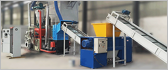
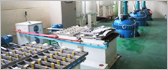
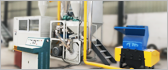


Electronic waste (e-waste) and printed circuit board (PCB) recycling production lines utilize equipment such as dismantling units, shredders, and sorters to separate materials—including copper, aluminum, iron, and plastics—from discarded electrical appliances and circuit boards, enabling the recovery of valuable metals.
1. Key Equipment and Processing Flow for E-waste Recycling Plants
E-waste encompasses a wide range of items, including old computers, household appliances, power supply equipment, and various electronic components. Depending on the specific material, production lines typically employ a combination of manual dismantling and mechanical processing.
A complete e-waste recycling plant may be configured with equipment such as conveyors, dual-shaft shredders, hammer crushers, magnetic separators, and eddy-current separators. Initially, components requiring specialized handling—such as batteries and capacitors—are removed either manually or via dedicated dismantling equipment. The remaining material is then shredded into smaller pieces. Magnetic separation is used to extract ferrous metals, while eddy-current separation recovers certain non-ferrous metals; the remaining material then undergoes further screening and sorting.
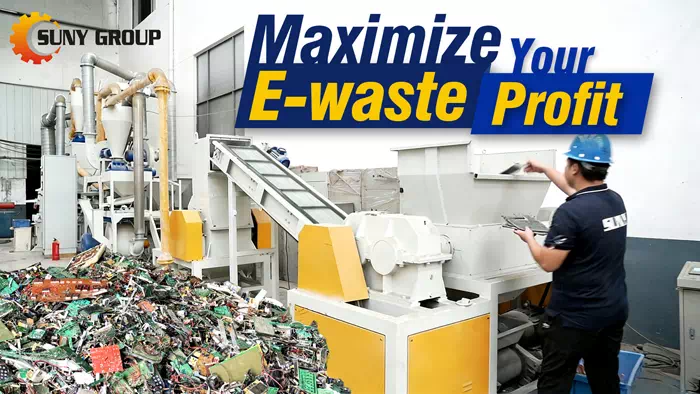
E-Waste Recycling Plant and PCB Recycling Line
2. Core Processes for PCB Recycling Plants
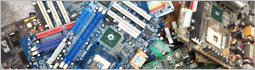
Printed circuit boards (PCBs) contain copper, resins, glass fiber, and small amounts of precious metals, making them highly valuable for recycling. PCB recycling plants primarily utilize mechanical crushing and physical separation processes.
The equipment typically includes dual-shaft shredders, hammer crushers, grinders, vibrating screens, air classifiers (pneumatic separators), and electrostatic separators. After undergoing multi-stage crushing and grinding, the metallic and non-metallic components are liberated from one another, with particle size controlled through screening. Air classification and electrostatic separation—which leverage differences in material density and electrical conductivity—are then used to separate copper particles from non-metallic materials like resins and glass fiber.
3. Production Line Configuration and Sorting Efficiency
E-waste and PCB recycling plants can be configured individually based on the type of feedstock, processing capacity, and desired end products, or they can be integrated into a comprehensive e-waste recycling system.
In practical operations, the particle size achieved during the crushing stage directly influences the efficiency of subsequent sorting processes. If particles are too large, metal and non-metal components may not be sufficiently liberated; conversely, if particles are too fine, excessive dust is generated, and the recovery of fine metal particles becomes more difficult. Therefore, it is essential to properly coordinate the crusher’s rotational speed, the screen aperture size, and the operating parameters of the sorting equipment. Furthermore, the production line should be equipped with a centralized dust-removal system to minimize the dust produced during crushing and grinding processes.
An appropriate combination of equipment can transform mixed electronic waste into iron, non-ferrous metals, copper powder, and non-metallic materials, providing a stable supply of raw materials for subsequent resource recovery and utilization.
Thank you for your interest in suny group. If you want to learn more about our E-waste recycling plant, copper wire recycling machine and other machines, Contact us now to find out what we can do for you next project!E-mail:[email protected] | Whatsapp:+8613674945231