Recycling equipment manufacturerFor a green future
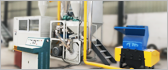
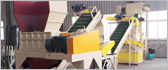
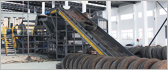


The UBC (Used Beverage Cans) decoating/delacquering production line is a specialized pre-processing system designed for recycled aluminum beverage cans. Through processes such as shredding, screening, magnetic separation, dust removal, and thermal treatment, it removes paint, ink, coatings, and organic impurities from the surface of the scrap aluminum, providing a cleaner and more consistent feedstock for subsequent aluminum smelting.
A typical production line consists of an infeed conveyor, a shredder, a magnetic separator, a trommel screen, an eddy current separator, a decoating furnace, and a dust collection system. The specific configuration of equipment is determined based on the condition of the raw material and the required processing capacity.
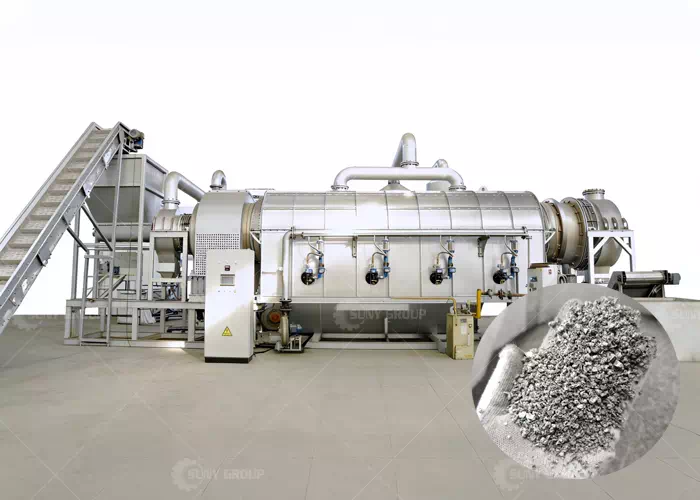
Aluminium decarbonization line for processing UBC recycled scrap
Initially, the used beverage cans are transported into a shredder, which breaks them down into relatively uniform aluminum fragments, facilitating downstream handling and thermal treatment. A magnetic separator removes ferrous impurities, while screening equipment eliminates fine debris and certain non-metallic contaminants. For mixed scrap, an eddy current separator can be integrated to enhance the separation of aluminum from other non-ferrous metals and non-metallic materials.
The pre-sorted aluminum fragments then enter the decoating furnace. By precisely controlling the heating temperature, residence time, and furnace atmosphere, the paint, ink, and organic coatings on the surface are thermally decomposed or oxidized, thereby reducing the organic content in the aluminum scrap.
In this stage, it is critical to maintain uniform temperature and precise material residence time. If the temperature is too low, the coatings may not be removed thoroughly; conversely, if the temperature is too high, it can lead to increased oxidation losses of the aluminum. Consequently, the furnace design, heating method, and automated temperature control system directly influence the processing efficiency.
The production line also requires auxiliary systems—including exhaust gas collection, secondary combustion, and dust purification—to treat the flue gas generated during the decoating process and minimize pollutant emissions.
The configuration of a UBC decoating production line should be tailored to the impurity content of the raw material, the target processing capacity, and the requirements of the subsequent smelting process. For feedstock with a high concentration of ferrous impurities, the initial magnetic separation stage should be strengthened; for highly mixed scrap, additional screening and eddy current separation steps may be necessary. An appropriate combination of equipment can not only improve the cleanliness of aluminum scrap but also reduce the impurity burden during the melting process, thereby enhancing the utilization efficiency of recycled aluminum raw materials.
Thank you for your interest in suny group. If you want to learn more about our E-waste recycling plant, copper wire recycling machine and other machines, Contact us now to find out what we can do for you next project!E-mail:[email protected] | Whatsapp:+8613674945231